
Business Valuation
Section outline
-

Teachers: Jozef Glova and Alena Andrejovská
Contacts: jozef.glova@tuke.sk | alena.andrejovska@tuke.sk

Dear students,
How do different types of investors think about an investment opportunity? What kind of securities and contracts do they offer? How should a company decide what is a "good deal"? This course introduces you to the challenges and pitfalls of financing enterprises. You will learn the basic tools for evaluating companies, including using discounted cash flow analysis in Excel and understanding how to apply this model to your entrepreneurial venture. You will then learn how valuation works with different types of securities investors use to finance their enterprises.
Thank you for your participation in the course!
-
Students mustMark as done
-
-
-
-
-
-
-
-
This study session introduces the principal information sources used to evaluate a company’s financial performance. Primary financial statements (income statement, balance sheet, cash flow statement, and statement of changes in equity) in addition to notes to these statements and management reporting are examined. A general framework for conducting financial statement analysis is provided. The session also includes a description of the roles played by financial reporting standard-setting bodies and regulatory authorities.
-
-
Financial reporting standards provide principles for preparing financial reports and determine the types and amounts of information that must be provided to users
of financial statements, including investors and creditors, so that they may make informed decisions. The students should be able to:• describe the objective of financial reporting and importance of financial reporting standards in valuation;
• describe the International Accounting Standards Board's conceptual framework, including qualitative characteristics of financial reports, constraints on financial reports, and required reporting elements;
• describe general requirements for financial statements under International Financial Reporting Standards (IFRS).
-
-
As individuals, we often face decisions that involve saving money for a future use, or borrowing money for current consumption. We then need to determine the amount we need to invest, if we are saving, or the cost of borrowing, if we are shopping for a loan. As investment analysts, much of our work also involves evaluating transactions with present and future cash flows. When we place a value on any security, for example, we are attempting to determine the worth of a stream of future cash flows. To carry out all the above tasks accurately, we must understand the mathematics of time value of money problems. The student should be able to:
• calculate and interpret the effective annual rate, given the stated annual interest rate and the frequency of compounding;
• solve time value of money problems for different frequencies of compounding;
• calculate and interpret the future value (FV) and present value (PV) of a single sum of money, an ordinary annuity, an annuity due, a perpetuity (PV only), and a series of unequal cash flows.
-
Students mustMark as done
-
Students mustMark as done
-
Opened: Wednesday, 22 March 2023, 9:50 AMClosed: Sunday, 14 May 2023, 10:59 PMStudents mustMark as done
-
-
In this topic, you will learn the general framework for valuing companies: prices as the discounted value of future cash flows. We will focus on how to determine cash flows and how discounting works. At the end of the lecture, you will be able to understand the basics of how investors determine the value of a company based on the income valuation approach.
-
-
-
-
-
-
Opened: Wednesday, 5 April 2023, 9:50 AMClosed: Sunday, 14 May 2023, 10:59 PMStudents mustMark as done
-
-
A company grows by making investments expected to increase revenues and profits. The company acquires the capital or funds necessary to make such investments by borrowing or using funds from owners. The company is producing value today by applying this capital to investments with long-term benefits. But how much value?
The answer depends not only on the investments’ expected future cash flows but also on the cost of the funds. Borrowing is not costless. Neither is using owners’ funds.
The cost of this capital is an important ingredient in both investment decision-making by the company’s management and the valuation of the company by investors. If a company invests in projects that produce a return over the cost of capital, the company has created value; in contrast, if the company invests in projects whose returns are less than the cost of capital, the company has destroyed value. Therefore, estimating the cost of capital is a central issue in valuation.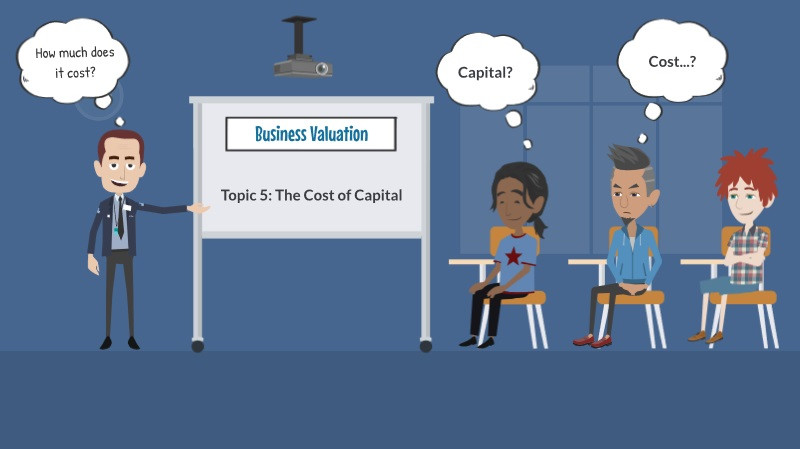
-
-
-
-
Opened: Wednesday, 19 April 2023, 9:50 AMClosed: Sunday, 14 May 2023, 10:59 PMStudents mustMark as done
-
-
In this part of the course, we will apply what you learned in the previous modules. At the end of the part, you will have built your first financial model of a firm, which you can change to apply to valuing a large firm or a small company.

-
-
-
-
Opened: Wednesday, 3 May 2023, 9:50 AMClosed: Sunday, 14 May 2023, 10:59 PMStudents mustMark as done
-
-
Assessment is a critical step in your learning process. We will check your learning and understanding. It gives you an insight into what went well and what didn't. That helps you understand your errors, understand the feedback received on your errors, and help you improve.

-
Opened: Sunday, 7 May 2023, 1:00 PMClosed: Sunday, 14 May 2023, 10:59 PMStudents mustMark as done
-
Students mustMark as done
PLEASE, ANSWER THE FOLLOWING QUESTIONS AND HELP US GET YOUR FINAL FEEDBACK!
-
-

-
Students mustMark as done
-
-
-
-